When buying a new road bike, most cyclists spend considerable time comparing frame geometry, wheelsets, and components. But one important measurement is frequently overlooked: handlebar width.
Many road bikes come equipped with handlebars that are wider than the rider actually needs. While wider handlebars aren't necessarily bad, they can change your shoulder position, increase your frontal area, and potentially contribute to neck and upper back discomfort.
At Toronto Bike Fits, one of the most common cockpit adjustments I recommend is moving to a slightly narrower handlebar.
But how narrow should you go? And is measuring your shoulders really enough to determine the correct width?
Let's look at how I approach handlebar selection during a professional bike fit.
Why Handlebar Width Matters for Road Cyclists
Your handlebars influence much more than where you place your hands. They affect how your shoulders, arms, and upper body interact with the bicycle.
Three considerations are particularly important.
1. Shoulder and Neck Comfort
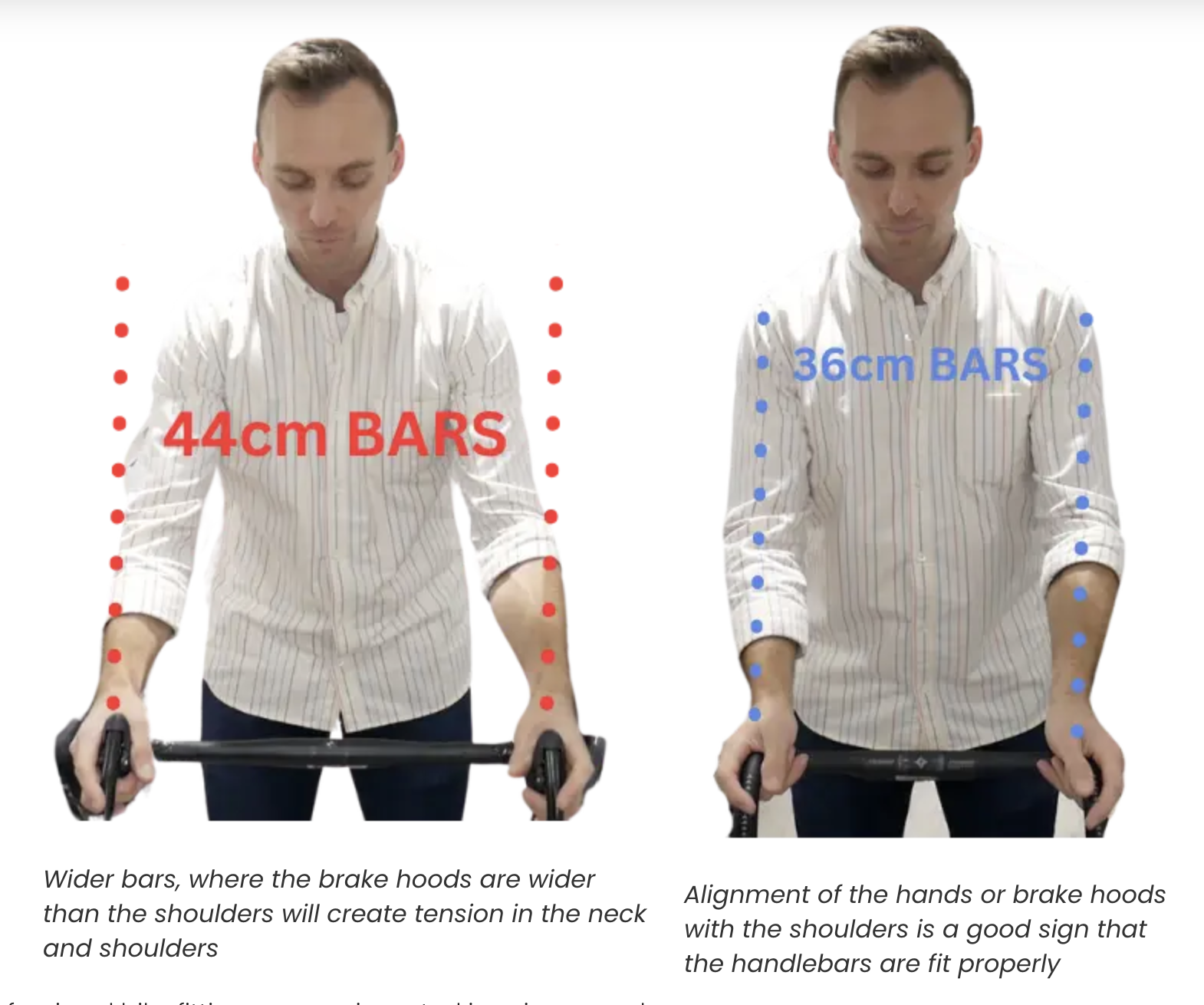
When your handlebars are excessively wide relative to your shoulders, your arms may be positioned farther apart than necessary.
Depending on your anatomy and riding posture, this can influence shoulder muscle activity and contribute to discomfort around the upper trapezius, neck, and shoulder blades.
However, narrower isn't automatically better. Handlebars that are too narrow may also feel restrictive or uncomfortable, particularly if they force an awkward wrist or shoulder position.
The objective is to find a width that allows your upper body to remain comfortable and supported during sustained riding.
2. Aerodynamics and Cycling Performance
One of the clearest potential advantages of narrower road handlebars is improved aerodynamics.
Moving the hands closer together can reduce the frontal area of the cyclist and bicycle, potentially reducing aerodynamic drag.
For competitive cyclists, this can be valuable because aerodynamic resistance becomes increasingly important as riding speed increases.
The actual benefit depends on your overall riding position, including torso angle, elbow position, and how comfortably you can maintain that posture.
A narrower handlebar that forces you into an uncomfortable position isn't necessarily an improvement.
3. Steering and Bike Handling
Handlebar width also changes how steering inputs feel.
Wider handlebars provide greater leverage over the steering system, while narrower handlebars can change the amount of arm movement and force required for steering corrections.
For road cycling, relatively narrow handlebars can work extremely well. Gravel riding, technical descending, and other disciplines may benefit from different considerations.
The best handlebar width is ultimately a balance between comfort, aerodynamics, and control.
How to Measure Your Shoulder Width for Road Bike Handlebars
Shoulder width provides a useful starting point when selecting handlebars.
During a bike fit, I measure the distance between the acromion processes — the bony landmarks located near the outer edges of your shoulders.
This measurement gives us an anatomical reference rather than relying on whatever handlebars happened to come with your bicycle.
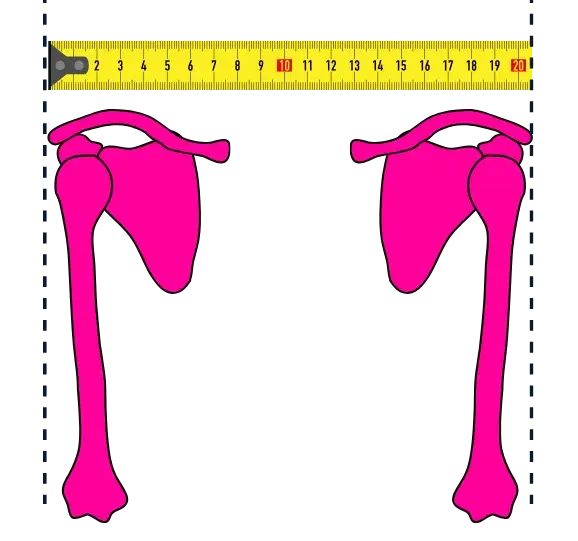
A straight line measurement from the ends of the acromions will give you your shoulder width. Pick a bar width that is the same or less in width. Dr Ritza usually recommends 2cm more narrow.
For example:
Shoulder width: 40 cm
Initial handlebar consideration: 38–40 cm
Potential narrower option: 36 cm, depending on the rider's anatomy, preferences, and riding position
In my fitting practice, I frequently find that handlebars approximately 2 cm narrower than measured shoulder width work well for road cyclists.
This is a practical starting point based on fitting experience, not a universal rule or scientifically established ideal.
Some cyclists prefer their bars approximately equal to shoulder width, while others can comfortably ride narrower setups.
Important: Not All Handlebars Are Measured the Same Way
One complication when shopping for handlebars is that manufacturers don't always measure width consistently.
Some specify the distance from centre to centre at the brake hoods, while others measure at the drops.
Modern flared road handlebars can also have significantly different widths at the hoods and drops.
A handlebar advertised as 40 cm might therefore position your hands differently from another manufacturer's 40 cm model.
Before purchasing, check:
Whether the advertised width is measured at the hoods or drops
Whether the measurement is centre-to-centre or outside-to-outside
How much flare the handlebar incorporates
The reach and drop dimensions
The shape and orientation of the brake hoods
These details become particularly important when comparing modern aerodynamic and integrated cockpits.
Should You Choose 36 cm, 38 cm, 40 cm, or 42 cm Handlebars?
There is no single correct width for every cyclist.
For many recreational and performance-oriented road cyclists, handlebars in the 36–40 cm range are worth considering, depending on body dimensions and riding preferences.
A cyclist with relatively narrow shoulders may find traditional 42 cm handlebars unnecessarily wide.
Conversely, a larger rider or someone who prefers greater steering leverage may be more comfortable with a wider setup.
Rather than choosing a width based entirely on your height or bicycle frame size, I recommend considering your shoulder measurement alongside your actual position on the bike.
Signs Your Handlebars Might Be Too Wide
Possible clues include:
Your hands sit noticeably wider than your shoulders when riding on the hoods.
You experience persistent tension around the neck, shoulders, or upper back.
Your elbows naturally move inward when you try to adopt an aerodynamic position.
Your upper body feels more comfortable when you bring your hands slightly closer together.
None of these signs proves that your handlebars are the cause of discomfort. Excessive reach, inappropriate handlebar height, brake hood position, and other bike fit variables can produce similar symptoms.
That's why handlebar width should be assessed as part of the complete riding position.
Don't Forget Handlebar Reach and Stem Length
Changing handlebar width isn't always as simple as swapping one bar for another.
Modern handlebars vary considerably in their reach, drop, and hood geometry.
For example, replacing a traditional handlebar with a compact aerodynamic model may change the effective position of your hands even when the stem length stays the same.
This can influence how much weight you place through your arms and how comfortably you reach the brake hoods.
During a professional bike fit, I evaluate the entire cockpit rather than considering handlebar width in isolation.
A properly selected handlebar should work with your stem length, handlebar height, saddle position, and overall riding posture.
Be Careful Before Buying an Integrated Carbon Cockpit
Integrated carbon handlebars have become increasingly popular on modern performance road bikes.
They can look fantastic, reduce exposed cabling, and offer aerodynamic advantages.
Unfortunately, they can also be expensive to replace.
Many integrated cockpits combine the stem and handlebar into a single component, meaning that choosing the wrong width or stem length can become a costly mistake.
If you're purchasing a new bicycle with an integrated cockpit, I strongly recommend confirming your preferred handlebar width and cockpit dimensions before ordering.
A bike fit before purchasing can help identify an appropriate setup and potentially avoid replacing expensive components later.
How I Evaluate Handlebar Width at Toronto Bike Fits
At Toronto Bike Fits, my approach goes beyond measuring your shoulders and recommending a number.
I consider your anatomical dimensions, current bicycle geometry, upper-body mobility, riding experience, and cycling goals.
I also look at how you naturally position your shoulders, elbows, wrists, and hands while riding.
For performance-oriented riders, aerodynamic considerations become part of the conversation. For recreational cyclists, sustained comfort and predictable handling may be more important.
Where appropriate, we can evaluate different cockpit dimensions and determine whether changing handlebar width is likely to improve your overall position.
The goal isn't to put every cyclist on the narrowest possible handlebars.
It's to find a setup that works with your body and the type of cycling you actually do.
Frequently Asked Questions About Road Bike Handlebar Width
Are narrower handlebars faster?
They can be. Narrower handlebars may reduce aerodynamic drag by bringing the rider's hands and arms closer together. However, the benefit depends on the complete riding position and whether the cyclist can comfortably maintain it.
Should my handlebars be the same width as my shoulders?
Not necessarily. Shoulder width is a useful reference, but many road cyclists are comfortable with handlebars slightly narrower than their measured shoulder width. Individual anatomy and riding preferences should guide the final choice.
Can handlebars that are too wide cause neck or shoulder pain?
Excessively wide handlebars may contribute to upper-body discomfort in some cyclists, but neck and shoulder pain can have several causes. Reach, handlebar height, riding posture, and physical factors should also be evaluated.
Is 38 cm too narrow for road cycling?
Not inherently. A 38 cm handlebar can be an excellent choice for many cyclists. Whether it's appropriate depends on shoulder dimensions, riding position, handling preferences, and the way the manufacturer measures the bar.
Should I change my handlebars before getting a bike fit?
Usually, I recommend having your position assessed before making an expensive cockpit change. This is particularly important if you're considering an integrated carbon handlebar and stem.
Find Your Ideal Handlebar Width With Toronto Bike Fits
Whether you're upgrading your road bike, considering narrower aerodynamic handlebars, or experiencing discomfort in your current riding position, selecting the right cockpit dimensions can make a meaningful difference.
I'm Dr. Alex Ritza, a chiropractor, experienced road cyclist, and professional bike fitter at Toronto Bike Fits.
My approach combines clinical knowledge of human movement with practical experience in cycling biomechanics and performance.
If you're unsure whether your current handlebars are the right width, a professional bike fit can help you make a more informed decision before investing in new components.
Visit Toronto Bike Fits to learn more about professional bike fitting in Toronto and book your assessment.