Buying the right cycling shoes might be one of the most important decisions you make as a cyclist, second only to choosing the correct bike frame size.
I'm Dr. Alex Ritza, The Cycling Doc, and after years of fitting cyclists in Toronto, I've learned that even the best bike fit cannot fully compensate for a poorly fitting pair of cycling shoes.
You can adjust saddle height, change cleat positioning, add wedges, install orthotics, and modify nearly every contact point on a bicycle. But if your shoes are the wrong shape or size for your feet, discomfort and inconsistent positioning can persist.
I experienced this myself. After nearly a decade of cycling and experimenting with different shoes, I finally found a pair of Bont cycling shoes that properly matched my feet.
Here's what I recommend looking for when buying your next pair of road, gravel, or mountain bike shoes.
1. Cycling Shoe Shape Matters as Much as Size
One of the biggest mistakes cyclists make is assuming that choosing the correct shoe length guarantees a good fit.
It doesn't.
Cycling shoes come in dramatically different shapes, particularly through the forefoot and midfoot.
Some shoes have a relatively straight, rectangular profile. Others curve inward between the heel and toes.
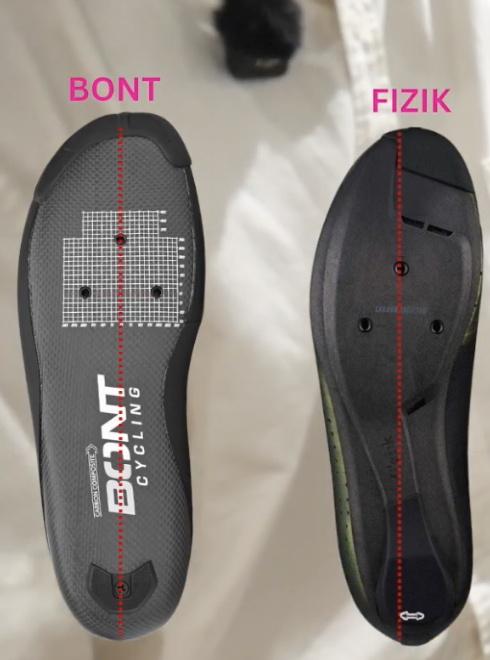
Note how much more curve the Fizik shoe has compared to the Bont - the line is at the far left of the heel of the Fizik but also straight through the centre of the Bont heel
For example, my Bont cycling shoes have a relatively straight profile and a broad forefoot. Their carbon construction creates a rigid, supportive platform around the foot.
Compare that with my previous Fizik shoes, which had a more curved profile and narrower forefoot.
Despite wearing the correct length in the Fizik shoes, I consistently experienced pressure around my little toe. Changing cleat position, adding orthotics, and experimenting with wedges never completely resolved the problem.
The issue wasn't my bike fit. The shape of the shoe simply didn't match my foot.
When choosing cycling shoes, examine the shape of your foot and compare it with the outline of the shoe.
A straight, broad foot may fit better in a shoe with a wider, less curved forefoot. A narrower or more curved foot may be more comfortable in a different design.
2. Measure Your Feet Before Buying Cycling Shoes
If you're investing several hundred dollars in cycling shoes, don't rely exclusively on your usual European shoe size.
I recommend having your feet measured using a Brannock device or a comparable professional measuring tool.
There are three particularly useful measurements:
Overall foot length: The distance from your heel to your longest toe.
Arch length: The distance from your heel to the ball of your foot, which helps identify where your forefoot naturally bends.
Foot width: The width across the forefoot, particularly around the metatarsal heads.
I also like to measure feet both while seated and while standing.
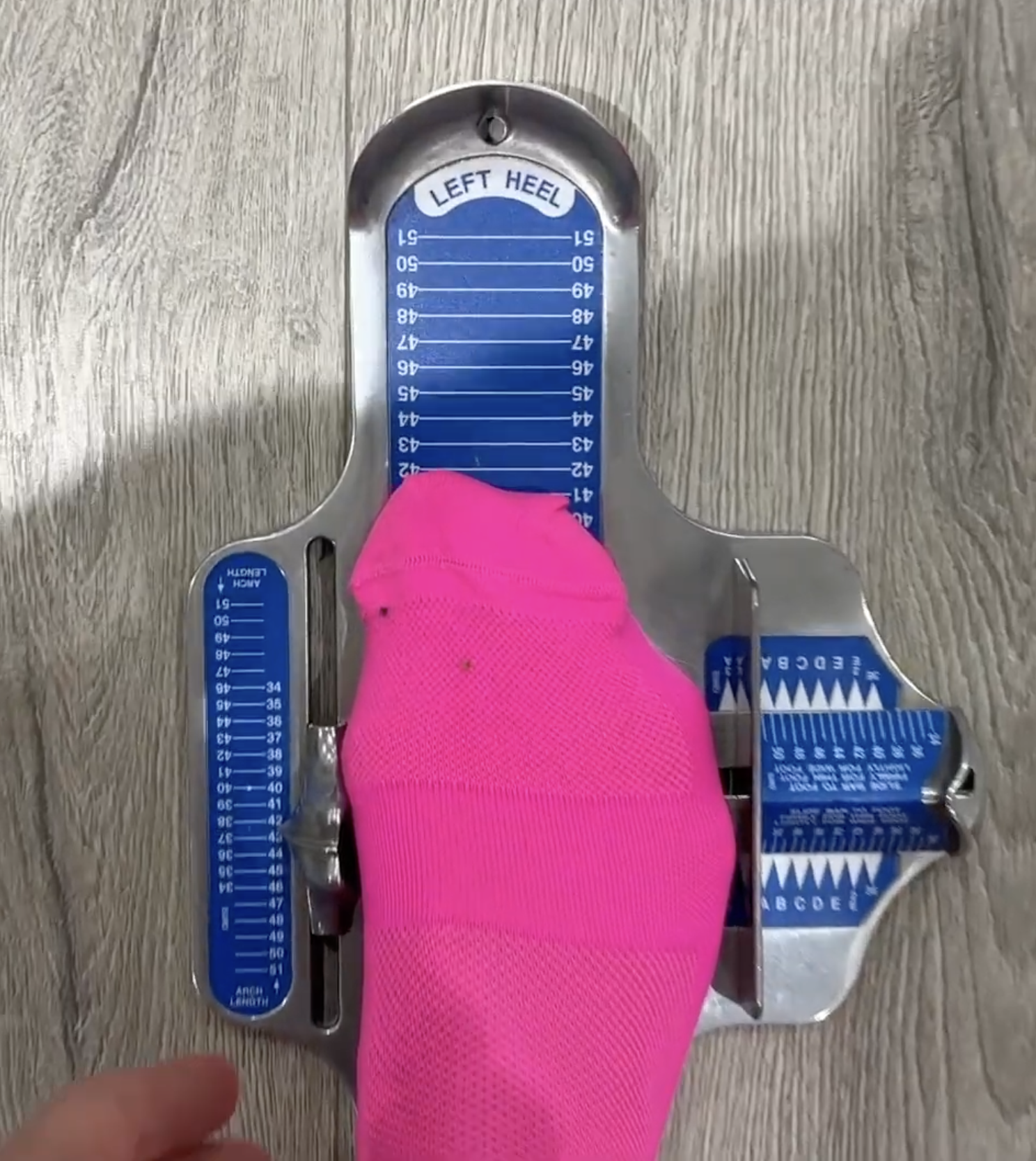
A Brannock device is essential to determine the arch length, foot length and foot width - this should be done in weight bearing [indicates appropriate size] and non-weight bearing. A large size difference between the two suggests significant arch drop and/or ankle pronation and would support the use of an insole in many cases
Why?
Because feet can change shape when loaded.
When you stand, your arch may lower, your forefoot may widen, and the overall dimensions of your foot may change.
These observations can help identify whether a cyclist may benefit from additional foot support and how their shoes should accommodate their anatomy.
Why Arch Length Is Important
Two people with the same overall foot length can have very different foot proportions.
One person may have relatively long toes and a shorter arch. Another may have shorter toes and a proportionally longer arch.
These differences can influence where the ball of the foot sits inside the shoe and whether the shoe's shape and volume are appropriate.
Arch length is useful information, but it should be considered alongside actual arch height, foot volume, and the shape of the shoe rather than used as a standalone measurement.
3. Which Cycling Shoe Brands Fit Different Foot Shapes?
Not all cycling shoes are built around the same foot shape. Some have a relatively straight sole, others curve inward through the forefoot, and some provide considerably more space across the toes or over the top of the foot.
Based on my experience fitting cyclists, here's where I would start:
Fizik: Generally worth considering for narrower feet, particularly if your foot has a more curved shape. I personally struggled with pressure against my little toe because the shape of my Fizik shoes didn't match my relatively straight forefoot.
Sidi: Traditionally a narrower-fitting option, although some models are available in wider versions. Worth trying for cyclists with narrower feet who want a secure fit.
Specialized: Often a good starting point for average-width feet. Some models also come in wider versions, but it's important to check the specific shoe rather than assuming every Specialized model fits alike.
Shimano: Another good starting point for average-width feet, with wide versions available in several models. These can be useful when the standard shoe feels too restrictive across the forefoot.
Bont: One of my preferred options for cyclists with a relatively straight foot and broad forefoot. Their anatomical shape and multiple width options can work particularly well for people who experience little-toe pressure in more curved shoes. These are what I eventually settled on for my own riding.
Lake: One of the first brands I consider for cyclists with particularly wide feet. Lake offers several different shoe shapes and width options, making it easier to accommodate feet that don't fit comfortably into conventional cycling shoes.
Nimbl: Another option to investigate for cyclists looking for a high-end performance shoe, although I would assess the particular model's shape and measurements before recommending it for a wide foot.
What About High Arches and Foot Volume?
Width and instep height are two different things.
Someone may have a relatively narrow foot but a high instep, meaning they need more room above the foot rather than a wider sole.
Lake and certain Sidi models are worth exploring when additional upper volume is needed, but the specific model matters more than the brand name.
My recommendation: Start by measuring your foot's length, width and arch length, then compare the actual shape and internal volume of several shoes. Don't buy a longer shoe simply because the correct length feels too narrow.
Ultimately, the best cycling shoe is the one that matches your foot—not the one with the highest price or stiffest carbon sole.
4. Don't Forget About Foot Volume and Instep Height
Width is only part of the equation.
The volume of a cycling shoe—particularly the space available over the top of the foot—is equally important.
Cyclists with a high instep may struggle with shoes that have a shallow upper, even when the length and width are correct.
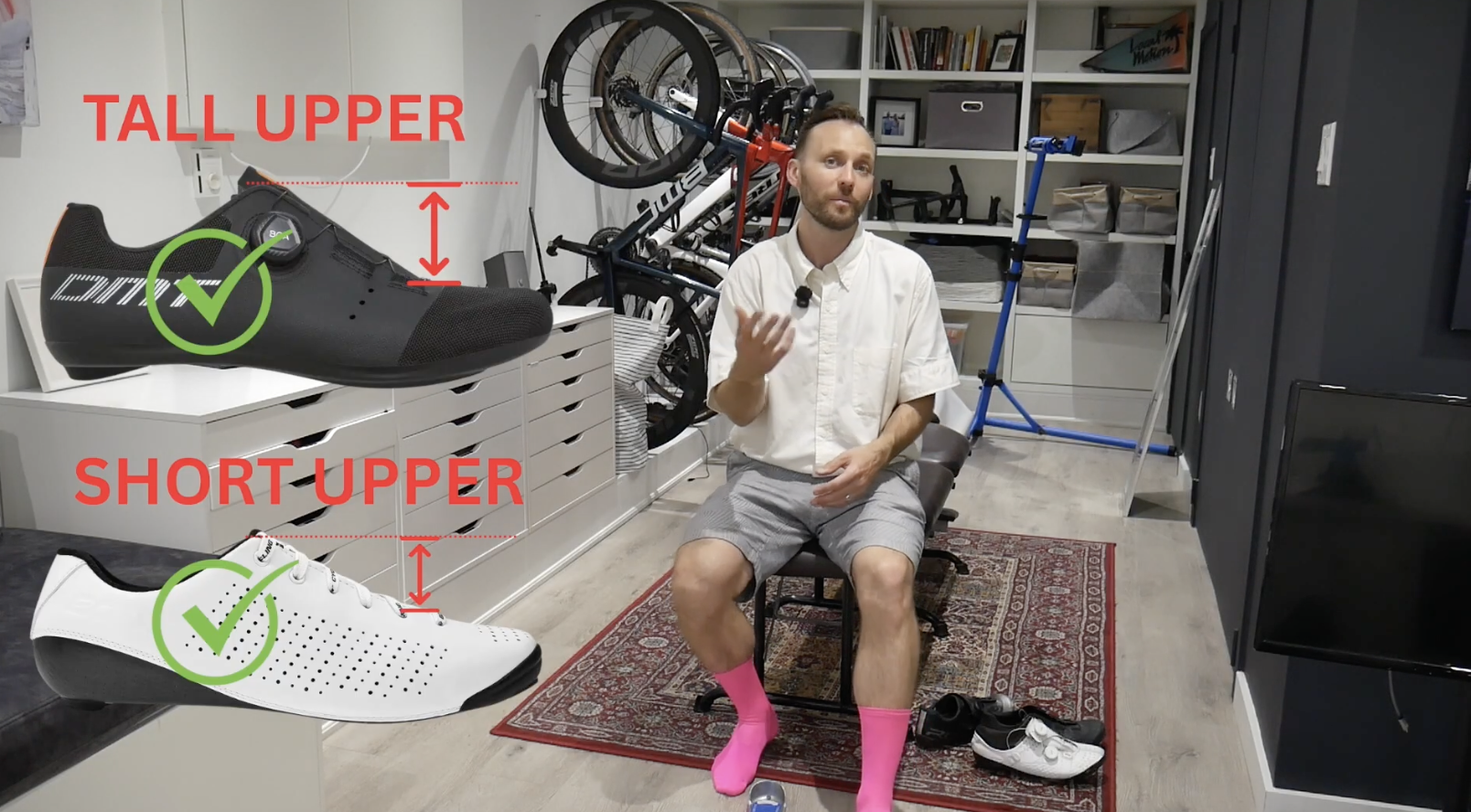
The upper is the part of the shoe where the laces/Boa system is. Higher arched individuals or those with large arch lengths often require a longer upper!
Excessive pressure from the upper or closure system can contribute to discomfort and numbness across the top of the foot.
When trying on shoes, pay attention to how much room you have above the midfoot and whether you can secure the shoe without excessive pressure.
A properly fitting shoe should hold the foot securely without requiring you to overtighten the BOA dials, straps, or laces.
5. How Much Toe Room Should Cycling Shoes Have?
Unlike running shoes, cycling shoes generally don't require a large amount of extra space in front of the toes.
For many cyclists, I aim for approximately 5 mm of clearance between the longest toe and the front of the shoe, although the ideal amount varies with foot shape, shoe construction, and personal preference.
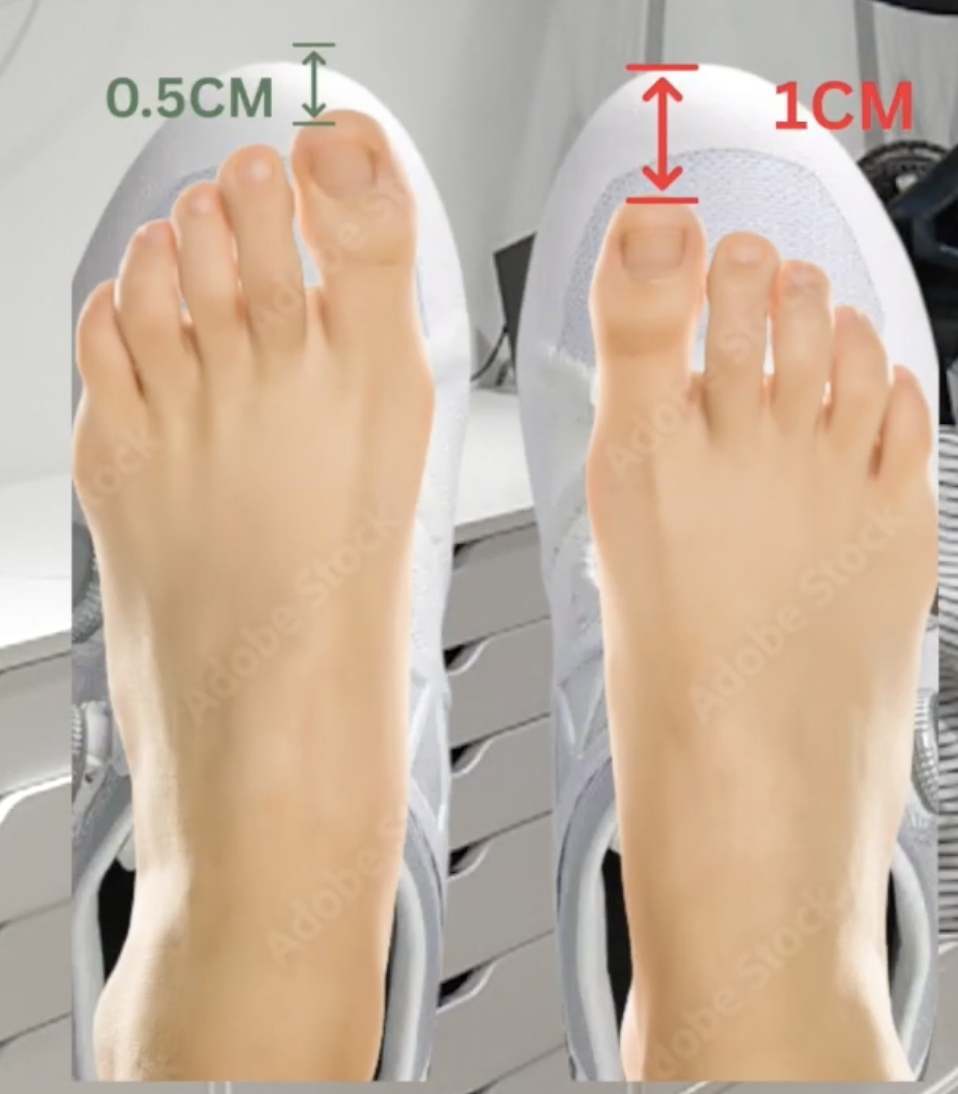
Your toes should not be compressed against the front of the shoe, but your foot also shouldn't slide forward and backward as you pedal.
Why is this important?
Because cycling shoe fit affects the relationship between your foot and your cleat.
When your foot moves excessively inside the shoe, the effective position of the cleat relative to your foot can change.
This makes it harder to establish consistent foot positioning and may contribute to discomfort.
Remember to consider your socks, too. A shoe you wear with thin summer socks may fit differently with thicker winter socks.
6. Do You Need Arch Support in Cycling Shoes?
This is one of the most interesting parts of cycling shoe fitting.
Many cyclists assume that arch support is primarily intended to prevent pronation or correct foot posture.
But cycling is different from walking and running.
During cycling, the foot is supported by a relatively rigid shoe and transfers force through a fixed pedal interface.
One potential benefit of appropriate arch support is increasing contact between the plantar surface of the foot and the shoe.
Instead of concentrating pressure in a few small areas, a well-matched insole can help distribute pressure more evenly.
Arch support may also improve the sensation of stability and contact inside the shoe.
I generally consider three starting points:
Low arch support
Medium arch support
High arch support
The goal isn't necessarily to push the arch upward or eliminate normal foot movement.
It's to find a level of support that matches the individual foot and improves comfort and stability.
Not every cyclist needs a custom orthotic. Many do well with an appropriately selected prefabricated cycling insole.
7. What Happens When Cycling Shoes Are Too Big?
Most cyclists recognize the problems caused by shoes that are too small.
But oversized cycling shoes can also be problematic.
When your foot slides inside the shoe, it becomes harder to maintain consistent positioning over the pedal.
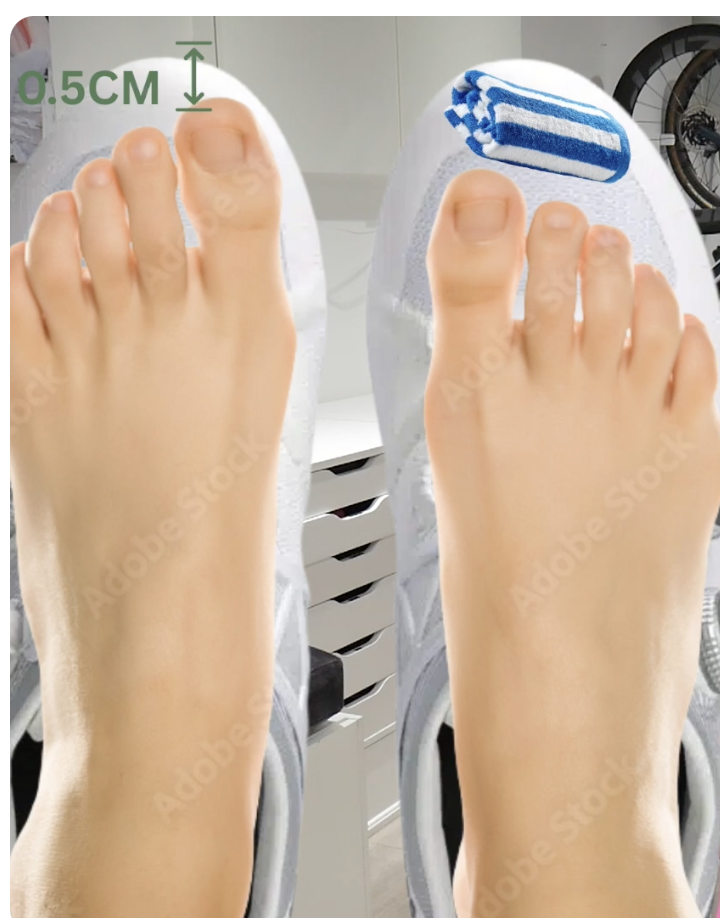
If a client presents with one of both shoes that are oversized, a common trick is to fill the front of the shoe with a rag of a towel to effectively shorten the shoe
You may also find yourself overtightening the closures to compensate for the extra space.
During bike fitting, I want the cyclist's foot to sit in a predictable, secure position so that adjustments to the cleats and other contact points remain consistent.
An oversized shoe can undermine that process.
A Simple Trick for Slightly Oversized Cycling Shoes
Occasionally, I work with cyclists who have slightly different-sized feet or shoes that are just a little too long.
One temporary fitting trick is to place a small amount of soft material in the front of the shoe to reduce excess space.
It may sound surprisingly basic, but it can help determine whether reducing internal shoe length improves the fit.
This is best treated as a short-term fitting experiment rather than a substitute for properly sized shoes. Any material should be secure and must not compress the toes or create pressure points.
8. Can a Bike Fit Fix Poorly Fitting Cycling Shoes?
A comprehensive bike fit can address many issues related to foot positioning.
Depending on the cyclist, I may evaluate:
Cleat fore-aft position and rotation
Foot and ankle mechanics
Insole and arch support
Internal or external wedging
Leg-length considerations and cleat shimming
Saddle position and its relationship to lower-limb mechanics
But there are limitations.
If the shoe is fundamentally too narrow, too short, or poorly matched to the shape of your foot, even extensive modifications may not produce a comfortable result.
That's why I consider cycling shoes a foundational part of the bike-fitting process.
9. My Cycling Shoe Buying Checklist
Before buying your next pair of cycling shoes, ask yourself:
Have I measured both feet for length, width, and arch length?
Does the shoe's shape match the natural outline of my foot?
Is there enough space through the forefoot without excessive movement?
Does the upper accommodate my instep comfortably?
Is the arch support appropriate for my foot?
Can I secure the shoe without overtightening it?
Have I tried the shoes with the socks I normally wear?
Does my foot remain stable when applying pressure through the pedal?
If possible, try several different brands and models before purchasing.
The most expensive shoe—or the one your favourite professional cyclist wears—isn't necessarily the best shoe for you.
Final Thoughts: Start With Your Shoes
After years of experimenting with cycling shoes myself, I eventually discovered that my discomfort wasn't something I could completely solve with cleat adjustments or orthotics.
I needed a shoe that actually matched my foot.
A properly fitted cycling shoe should feel secure, comfortable, and predictable. You shouldn't constantly be thinking about your feet while riding.
If you're experiencing foot numbness, hot spots, toe pressure, or persistent discomfort on the bike, your shoes deserve a closer look.
At Toronto Bike Fits, I evaluate cycling shoe fit, foot mechanics, cleat positioning, and overall cycling biomechanics to help cyclists find a more comfortable and efficient position.
Learn more about professional bike fitting in Toronto: https://www.bikefittoronto.com/
Watch my complete cycling shoe fitting guide: https://youtu.be/UyA3nfHRx-o
Dr. Alex Ritza is a Toronto-based corrective chiropractor and bike fitter with more than a decade of road cycling and racing experience.