By Dr. Alex Ritza | Toronto Bike Fits
Not all bike fits are created equal.
Two cyclists can ride the same bicycle, have similar body measurements, and still require completely different riding positions. One may feel comfortable with a relatively aggressive handlebar position, while the other develops neck pain, hand numbness or low back discomfort after an hour.
The difference isn't necessarily fitness, flexibility or experience. It's how each rider's body interacts with their bicycle.
At Toronto Bike Fits, we believe a great professional bike fit starts with understanding the cyclist, not simply measuring the bicycle.
Whether you're a recreational cyclist, weekend gravel rider, competitive road racer or triathlete, here's what you should expect from a comprehensive bike fitting assessment.
1. A Great Bike Fit Starts Before You Get on the Bike
One of the biggest differences between a basic bike adjustment and a comprehensive professional bike fit is the assessment that happens before pedalling.
Many cyclists arrive with a specific complaint:
Knee pain that develops after longer rides
Numbness or pressure in their hands
Saddle discomfort or instability
Neck and shoulder fatigue
Low back pain during harder efforts
Difficulty maintaining an aerodynamic position
A feeling that one leg works differently from the other
These symptoms provide useful information, but identifying where discomfort occurs is only the beginning.
The important question is why it's happening.
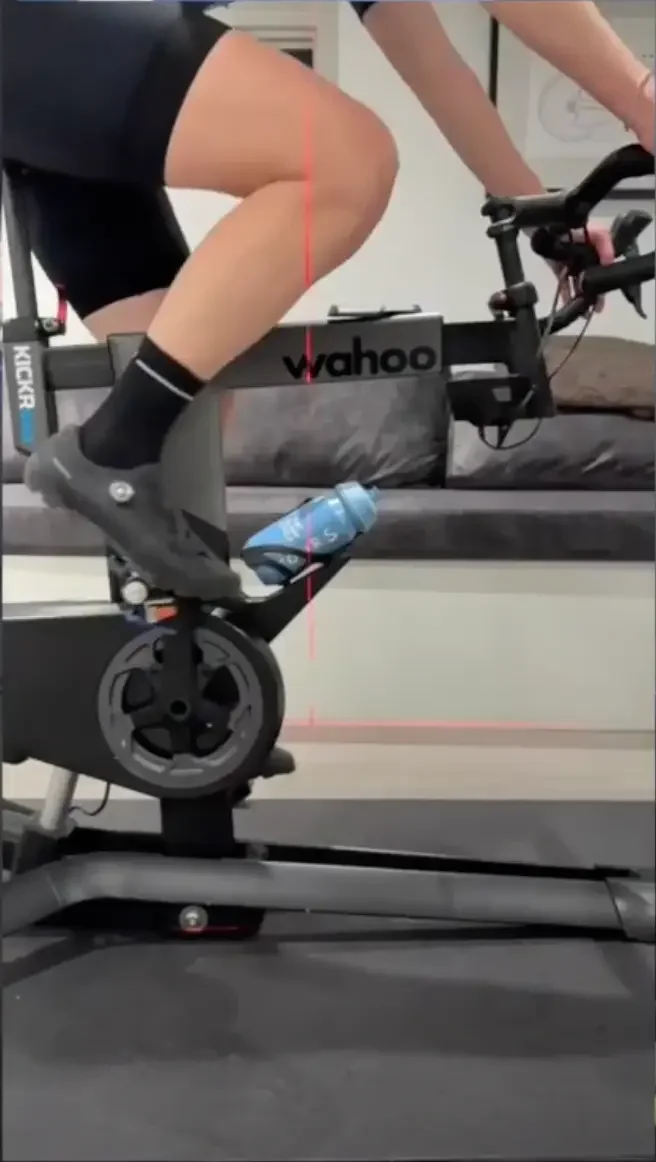
It is difficult to do a GREAT DIY bike fit unless you have all of the equipment like lasers and cameras to check for proper alignment – nevermind knowledge of the anatomy and what angles to look for
For example, knee pain while cycling may be associated with saddle position, cleat setup, training load or limitations in how the hip and lower limb function.
Similarly, hand numbness may be related to excessive pressure through the handlebars, but the underlying reason could involve saddle position, reach, pelvic stability or the rider's overall weight distribution.
Simply changing the component closest to the painful area may not address the actual problem.
What should a physical bike fit assessment include?
At Toronto Bike Fits, our assessment considers factors such as:
Hip mobility and pelvic control
Spinal mobility and posture
Lower-limb strength and movement patterns
Foot structure and stability
Previous injuries and physical limitations
Differences between the left and right sides
Cycling experience, training volume and performance goals
As a chiropractor and experienced competitive cyclist, I approach bike fitting from both a clinical and cycling-performance perspective.
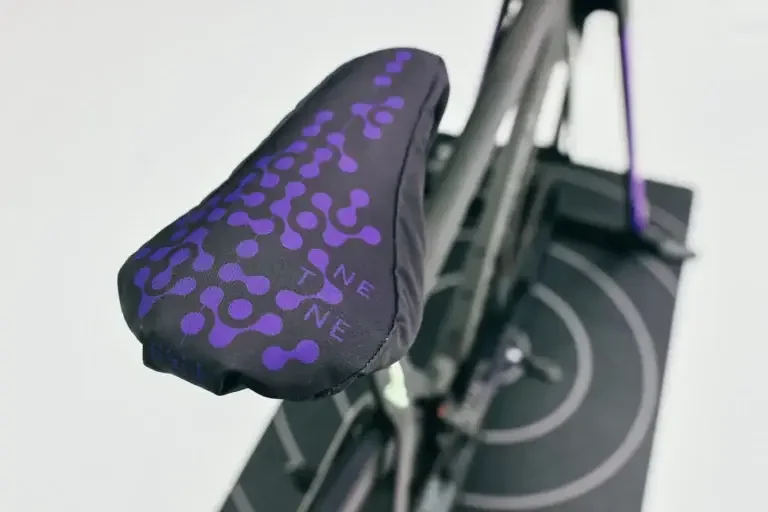
Bike fit technology can often be more about marketing than effectiveness. 3D saddle mapping if an effective tool in theory but we have found that the pressure mapping sleeves can shift and move and provide inconsistent data.
The goal is to understand what your body can comfortably and efficiently do before determining where your bicycle should position you.
2. Your Ideal Bike Position Is a Range, Not a Perfect Number
Cyclists frequently ask questions such as:
What should my saddle height be?
What is the ideal knee angle?
How much handlebar drop should I have?
These are reasonable questions, but they assume there is a single optimal position that applies to everyone.
In reality, there is no universally correct knee angle, saddle setback or handlebar height.
A cyclist with excellent hip mobility, good trunk control and years of racing experience may tolerate a very different position from someone returning to cycling after an injury.
Even the same rider may need to reconsider their position as their fitness, mobility, equipment or riding goals change.
Finding your individual fit window
Rather than chasing a specific number, we work to identify a fit window: a range of positions that balances comfort, stability, mechanical efficiency and performance.
Within that window, small adjustments can be evaluated according to how the cyclist actually responds.
For example, a slightly lower handlebar position might improve aerodynamics without compromising comfort for one rider. For another, the same adjustment might increase upper-body fatigue and make it difficult to maintain the position during a long ride.
A great bike fit isn't about making every cyclist look the same.
It's about finding a sustainable position that works for your body and the type of riding you do.
3. Bike Fitting Is a System: Every Adjustment Affects Something Else
One of the most overlooked aspects of professional bike fitting is how closely the different adjustments are connected.
Consider a cyclist who feels excessive pressure on their hands.
Their first instinct may be to install a shorter stem or raise the handlebars.
But what if their saddle is positioned too far forward, shifting too much weight toward the front of the bicycle?
Changing the stem might improve the symptom without addressing the underlying weight distribution.
Similarly, changing cleat position can influence lower-limb mechanics, which may affect the rider's preferred saddle height and pedalling position.
The main areas we assess
Saddle position: Height, fore-aft position, tilt and the rider's ability to maintain stable contact with the saddle.
Foot and cleat setup: Cleat fore-aft position, rotational alignment, stance width and the interface between the foot and cycling shoe.
Handlebar position: Reach, height, width and how the rider distributes weight through the upper body.
Overall bicycle geometry: Whether the frame, cockpit and available adjustments can realistically accommodate the rider's needs.
Pedalling mechanics: How the rider moves under load, including stability, coordination and any consistent movement asymmetries.
The sequence matters.
A professional bike fit should evaluate these relationships rather than treating each component as an isolated problem.
4. Does Advanced Bike Fit Technology Actually Matter?
Modern bike fitting studios can use motion-capture cameras, pressure mapping, lasers, digital angle measurements and sophisticated software.
These technologies can be helpful, but they are tools rather than guarantees of a successful fit.
For example, motion analysis may identify changes in joint angles or movement patterns. However, the measurements still need to be interpreted in the context of the cyclist's anatomy, symptoms and goals.
A rider whose knee angle falls within a commonly recommended range isn't necessarily comfortable, efficient or optimally positioned.
Similarly, saddle pressure mapping may provide useful information, but the quality of the data depends on the equipment, measurement conditions and how the results are interpreted.
Technology should support clinical reasoning
At Toronto Bike Fits, we use visual assessment, video, measurement tools and rider feedback to help evaluate and refine the position.
The most important part of the process isn't how many measurements are collected.
It's whether those measurements lead to meaningful improvements in the cyclist's position.
Sometimes a small adjustment produces a substantial improvement in comfort. Other times, the solution involves several interconnected changes or addressing a physical limitation away from the bike.
A sophisticated fitting system is only as useful as the person interpreting the results.
5. The Best Bike Fit Balances Comfort and Performance
A common misconception is that cyclists must choose between comfort and speed.
Competitive riders sometimes assume that a lower, longer position is automatically faster, while recreational cyclists may believe that sitting as upright as possible is always more comfortable.
Neither assumption is consistently correct.
Aerodynamics matter, particularly at higher speeds. However, an aerodynamic position provides little practical benefit if the rider cannot sustain it, maintain stable contact points or produce power effectively.
Likewise, an unnecessarily upright position may create its own problems with weight distribution and saddle loading.
Different cyclists have different priorities
For a road racer, we may prioritize a sustainable aerodynamic position, stability during high-power efforts and efficient use of the available cockpit geometry.
For a gravel cyclist, the priorities may include comfort over rough surfaces, control on technical terrain and stability during long events.
For a recreational rider, the focus might be reducing discomfort, improving confidence and making longer rides more enjoyable.
A triathlete may need a position that considers aerodynamic efficiency, breathing, power production and the demands of running after cycling.
A great bike fit accounts for these differences instead of applying the same formula to every bicycle and rider.
6. Can You Get a Good Bike Fit Using an App or Online Video?
Bike fit apps and online tutorials can be useful starting points, particularly for cyclists trying to identify obvious setup problems.
A phone camera can help estimate joint angles, and online resources can explain how saddle height, cleat position or handlebar reach influence riding posture.
However, there are limitations.
A video cannot reliably assess every aspect of a cyclist's mobility, stability, injury history or response to physical changes.
Camera positioning, measurement error and movement variability can also influence the results.
Most importantly, a measurement that looks correct on screen doesn't necessarily tell you whether the position is appropriate for that individual.
Online tools can help cyclists learn about bike fitting, but they should not be confused with a complete, individualized assessment.
7. What Should You Receive After a Professional Bike Fit?
A good bike fit shouldn't end when you step off the trainer.
Your final position should be documented so that it can be maintained, reproduced or transferred when necessary.
At Toronto Bike Fits, we provide a comprehensive digital measurement report.
This is particularly useful when:
Purchasing a new road or gravel bike
Changing handlebars or stems
Replacing a saddle
Travelling with a bicycle
Reassembling a bike after transport
Comparing different bicycle geometries
Returning to a previously successful position
Even a well-executed bike fit can lose its value if the final measurements aren't recorded accurately.
We also encourage cyclists to understand the reasoning behind their adjustments rather than treating their final position as a collection of unexplained numbers.
8. How to Choose a Professional Bike Fitter in Toronto
If you're comparing bike fitting services in Toronto, there are several important questions worth asking.
Does the fitter assess your body before making adjustments?
A detailed physical assessment can help identify limitations or injuries that may influence your riding position.
Do they have experience with your type of cycling?
Road racing, gravel, mountain biking, commuting and triathlon can place different demands on the rider.
Can they explain why they're making changes?
A good fitter should be able to explain the reasoning behind their recommendations rather than relying exclusively on a software-generated target.
Will they assess your entire position?
Saddle height alone rarely tells the complete story. Cleat position, saddle stability, cockpit setup and overall bicycle geometry all deserve consideration.
Will you receive your final measurements?
Accurate documentation makes it easier to maintain your position and avoid unnecessary repeat adjustments.
Do they understand cycling-related pain and injuries?
If you're experiencing persistent symptoms, a fitter with relevant healthcare training may be particularly helpful in distinguishing bicycle-related problems from issues that require clinical assessment or treatment.
Ultimately, the quality of a bike fit depends on the combination of technical knowledge, experience, assessment and communication.
Professional Bike Fitting at Toronto Bike Fits
At Toronto Bike Fits, our approach combines extensive cycling experience with a comprehensive understanding of human biomechanics.
I'm Dr. Alex Ritza, a Toronto chiropractor and longtime competitive cyclist. I work with cyclists ranging from recreational riders to experienced racers who want to improve comfort, address recurring problems and refine their performance.
Our comprehensive bike fitting process typically takes approximately three hours and includes an individualized physical assessment, evaluation of your riding position, practical adjustments and documentation of your final setup.
Rather than trying to force every cyclist into a predetermined position, we work to identify the setup that makes sense for your body, bicycle and goals.
Frequently Asked Questions
Is a professional bike fit worth it?
For cyclists experiencing discomfort, changing bicycles or spending significant time riding, a professional fit can be a worthwhile investment. It can help identify setup problems and improve comfort, although individual results vary.
Should I get a bike fit if I don't have pain?
Yes. A bike fit isn't exclusively for injured cyclists. It can also help refine comfort, positioning and performance, particularly when training volume or cycling goals change.
How long does a professional bike fit take?
The duration depends on the service and the complexity of the assessment. Comprehensive appointments at Toronto Bike Fits typically take approximately three hours.
Can a bike fit make me faster?
Potentially. Changes to aerodynamics, stability and riding comfort may improve performance, particularly if they allow you to maintain an effective position for longer. However, a bike fit does not automatically increase your fitness or power output.
Should I get a bike fit before buying a new bike?
It can be especially valuable. Understanding your preferred riding coordinates and physical requirements can help you select a suitable frame size and avoid purchasing a bicycle with limited adjustment options.
Can a bike fit help with knee pain or hand numbness?
Sometimes. These symptoms can be influenced by bicycle position, but they may also involve training load, underlying injuries or other factors. Persistent or progressive symptoms warrant appropriate clinical assessment.
Ready to Improve Your Position on the Bike?
Whether you're preparing for a cycling event, struggling with discomfort or simply wondering whether your current setup could be better, a comprehensive bike fit can help you better understand how your body interacts with your bicycle.
At Toronto Bike Fits by Dr. Alex Ritza, our goal is straightforward: find a position that supports your comfort, cycling goals and long-term enjoyment of riding.
Explore our professional bike fitting services or book your appointment at Toronto Bike Fits.