Your bike can be perfectly adjusted on paper and still be completely wrong for you.
As a chiropractor, certified bike fitter, and competitive cyclist with more than 12 years of racing experience, I've seen how often cyclists struggle with problems that can't be solved by adjusting their saddle a few millimetres.
Knee pain, low back stiffness, numb hands, saddle discomfort, and inefficient pedalling are common complaints. But the cause isn't always obvious.

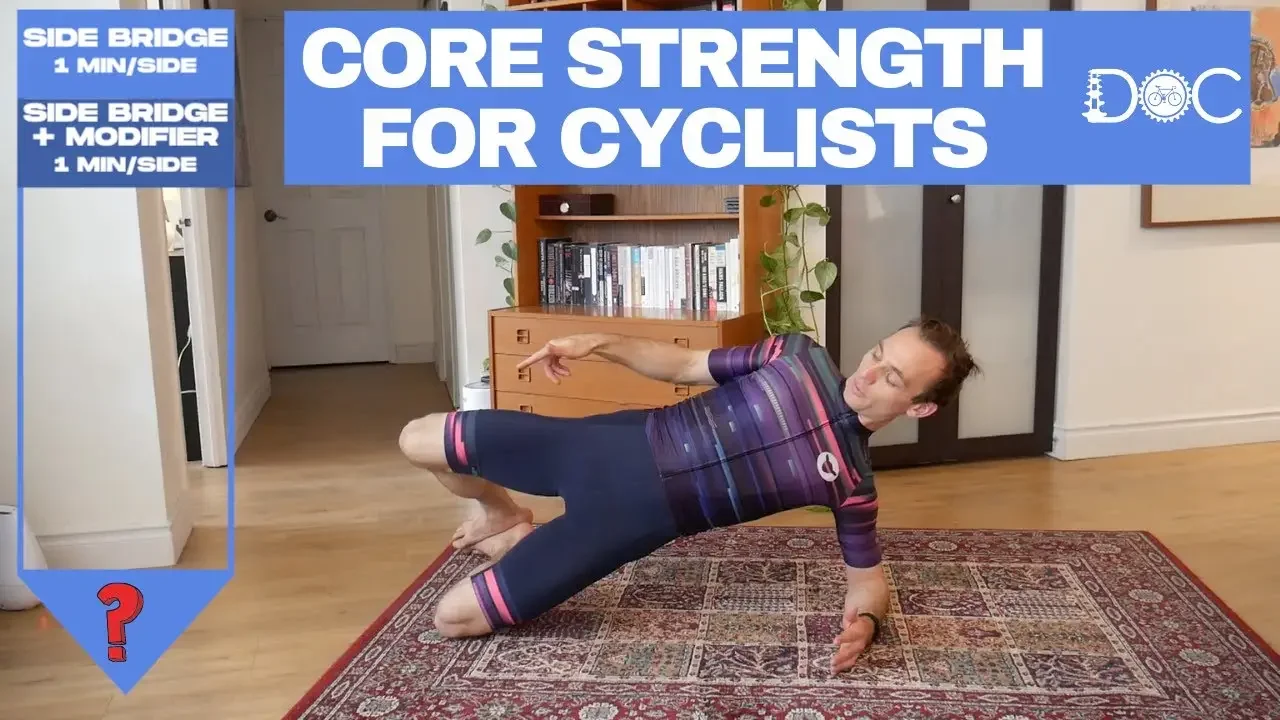
Our ” What Is The Best Bike Fit ? | Best Bike Fit Toronto ” video. Click the image to access.
Sometimes the problem is your bike. Sometimes it's your body. And quite often, it's a combination of both.
At Toronto Bike Fits, my approach is simple: understand how your body functions, identify what might be limiting your comfort or performance, and then customize your bike to work with you.
Why a Traditional Bike Fit Might Not Be Enough
Most bike fitting systems focus on positioning the cyclist within a series of recommended measurements.
Saddle height, knee angles, reach, handlebar drop, and cleat position are all important. But measurements alone don't tell us whether a position is appropriate for the person riding the bike.
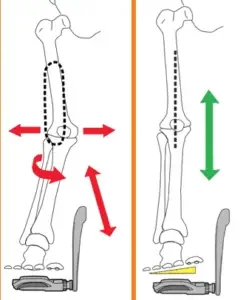
Lower limb alignment is going to be affected by foot biomechanics, skeletal and spine structure and a host of other factors. A thorough assessment is needed to differentiate between these factors
Consider two cyclists with identical height and inseam measurements.
One might have excellent hip mobility but limited ankle dorsiflexion. The other might have restricted hip flexion, a history of lumbar disc injuries, or differences in lower-limb structure.
Should they have the same bike fit?
Probably not.
A great bike fit isn't about achieving an ideal set of angles. It's about finding the best position for your unique body, cycling goals, and physical capabilities.
That's why my fitting process starts with the cyclist, not the bicycle.
The Cycling Doctor's Approach: Is It Your Body, Your Bike, or Both?
My background as a corrective chiropractor allows me to combine a detailed clinical examination with the practical demands of cycling biomechanics.
Having performed more than 40,000 patient visits, I've developed a systematic approach to identifying what I call the Core Problem rather than simply addressing the Collateral Damage.
In cycling, that means looking beyond where you experience pain or discomfort to understand why it may be happening.
1. Understanding Your Body
Before making major changes to your position, I perform a comprehensive NeuroStructural assessment examining factors such as:
Spinal mobility and posture
Hip structure, mobility, and strength
Lower-limb alignment and functional asymmetries
Foot and ankle biomechanics
Muscle strength, coordination, and movement control
Previous injuries and relevant neurological findings
These findings help establish what your body can comfortably and efficiently accommodate on the bike.
2. Understanding Your Bike
Next, we examine how your current position interacts with your body.
This includes evaluating saddle height and setback, reach and handlebar position, foot-pedal interaction, and your movement patterns while pedalling.
Video analysis and real-time feedback help identify opportunities to improve comfort, stability, and efficiency.
Importantly, not every unusual movement or asymmetry needs to be corrected. Some are normal adaptations to your individual anatomy.
3. Bringing the Body and Bike Together
Once we understand both sides of the equation, we can make informed decisions.
For some cyclists, a few targeted adjustments are all that's necessary.
Others may benefit from changes to their footwear, insoles, or cleat position.
And sometimes the bike is already well configured, but a limitation in strength, mobility, or injury recovery deserves attention.
The objective isn't to make everyone look identical on a bicycle. It's to find a sustainable position that supports how you actually ride.
Common Cycling Problems: When the Bike Isn't the Whole Story
Knee Pain While Cycling
Knee pain is one of the most common reasons cyclists seek a professional bike fit.
Saddle height, setback, cleat rotation, and pedal stance width can all influence how forces are distributed around the knee.
But knee pain can also be affected by hip mechanics, training load, previous injuries, and individual skeletal structure.
For example, repeatedly adjusting cleat position may provide little benefit if the primary problem is an irritated tendon from a sudden increase in training intensity.
The first question shouldn't be, "What should we adjust?"
It should be, "Why is your knee hurting?"
Low Back Pain and Stiffness
Low back discomfort is another frequent complaint, especially during longer rides or sustained efforts in an aggressive position.
Excessive reach or handlebar drop can contribute, but so can limitations in hip mobility, reduced muscular endurance, and existing spinal conditions.
A cyclist with restricted hip flexion may compensate with additional lumbar flexion to reach the handlebars.
Simply raising the bars might help, but understanding the underlying limitation allows us to make a more informed decision.
Hand Numbness and Neck Pain
Numbness or tingling in the hands is often attributed to excessive pressure on the handlebars.
Sometimes that's exactly what's happening.
But saddle position, cockpit length, wrist posture, and the distribution of body weight can all influence pressure through the hands.
Neck and shoulder discomfort may similarly be influenced by reach, visual demands, training duration, and the cyclist's physical capacity.
A comprehensive assessment helps distinguish bike-related loading problems from conditions that may require clinical evaluation.
Saddle Discomfort
Saddle discomfort is not always solved by buying a new saddle.
Pelvic position, saddle angle, reach, handlebar drop, and individual anatomy all influence how a cyclist interacts with the saddle.
Before recommending a replacement, I want to understand why the current setup isn't working.
Sometimes the solution is surprisingly simple.
Bike Fitting for Performance, Not Just Pain Relief
You don't need to be injured to benefit from a professional bike fit.
Many of the cyclists I work with are comfortable on their bikes but want to improve their position for racing, long-distance events, or everyday riding.
A competitive cyclist may want to explore a more aerodynamic position without compromising sustainable power production.
An endurance rider may prioritize comfort over six-hour rides.
A gravel cyclist may need a position that provides stability and control over challenging terrain.
These are different objectives, and they require different fitting decisions.
The most aerodynamic position isn't necessarily the fastest if you can't comfortably sustain it.
My goal is to help you find the appropriate balance between comfort, power production, aerodynamics, and your individual riding demands.
What Makes Toronto Bike Fits Different?
I bring three perspectives to every fit.
A chiropractor's clinical understanding. My experience assessing spinal, neurological, and musculoskeletal conditions helps me recognize when a cycling complaint may involve more than bike position.
A certified bike fitter's technical expertise. As a SICI Level 2 certified advanced fitter, I use a structured fitting process to evaluate how the rider and bicycle interact.
A competitive cyclist's practical experience. After more than a decade of road racing and training, I understand the compromises involved in balancing comfort, aerodynamics, handling, and performance.
These perspectives help me work with cyclists ranging from recreational riders to experienced racers.
And importantly, not every cyclist needs chiropractic treatment.
When your bike is the problem, we focus on the bike. When physical limitations are relevant, we discuss appropriate rehabilitation or clinical care. When both contribute, we develop a plan that addresses both.
What to Expect From a Toronto Bike Fits Appointment
Every fitting experience begins with a complimentary virtual case review.
This gives us an opportunity to discuss your cycling history, current equipment, physical concerns, and goals before deciding whether a comprehensive assessment is appropriate.
If we proceed, the process includes:
Step 1: NeuroStructural Examination
A detailed assessment of your body's structure, mobility, strength, and relevant functional limitations.
Step 2: Cycling Ergonomic Assessment
An evaluation of your current position, pedalling mechanics, and interaction with the bicycle.
Step 3: Customized Bike Fit
Adjustments to your bike based on the assessment findings and your individual objectives.
Step 4: Corrective Exercise Recommendations
When appropriate, exercises targeting relevant strength, mobility, or movement limitations.
Step 5: Follow-Up and Refinement
An opportunity to review how the new position feels during real-world riding and make further adjustments when necessary.
Do You Need a Bike Fit or a Cycling Injury Assessment?
This is one of the most important distinctions I make.
If you're experiencing pain while cycling, it doesn't automatically mean your bike fit is wrong.
A new training program, an underlying injury, or a physical limitation may be contributing to your symptoms.
Likewise, you can be perfectly healthy off the bike but experience discomfort because your bicycle isn't appropriately configured.
Sometimes both are involved.
The advantage of combining a clinical examination with professional bike fitting is that we can make a more informed decision about where to start.
Work With Toronto's Cycling Doctor
Whether you're preparing for your first century ride, racing competitively, or simply trying to enjoy your bike without recurring discomfort, my goal is to help you get more out of your riding.
At Toronto Bike Fits, we don't begin with a predetermined position or a one-size-fits-all formula.
We begin by understanding you.
Your body. Your bike. Your goals. Your fit.
Book a Complimentary Bike Fit Case Review at Toronto Bike Fits
Dr. Alex Ritza, Chiropractor
SICI Level 2 Certified Advanced Bike Fitter
Toronto Bike Fits | Toronto, Ontario
Frequently Asked Questions
Can a bike fit help with cycling knee pain?
A professional bike fit can identify positioning factors that may contribute to knee discomfort, including saddle height, cleat alignment, and pedal stance width. However, not all knee pain is caused by bike position. A clinical assessment may be appropriate when symptoms persist.
Can a chiropractor perform a professional bike fit?
Yes. Dr. Alex Ritza is both a licensed Ontario chiropractor and a SICI Level 2 certified advanced bike fitter. His fitting process combines clinical assessment with cycling-specific ergonomic analysis.
Do I need to be injured to benefit from a bike fit?
No. Many cyclists pursue professional fitting to improve comfort, explore a more aerodynamic position, prepare for longer rides, or better accommodate their individual anatomy.
Will I need chiropractic treatment after my bike fit?
Not necessarily. Chiropractic care is discussed only when clinical findings suggest it may be appropriate. Many cyclists simply need adjustments to their bicycle.
Where can I get a professional bike fit in Toronto?
Toronto Bike Fits provides comprehensive bike fitting services through Dr. Alex Ritza, combining NeuroStructural assessment, cycling biomechanics, and individualized fitting recommendations.